How to Plan Your "Second Half Bucket List"
A list of things to do before you die is a strange way to plan a life. A calmer approach to deciding what you want from the decades ahead, and how to shape it into something you will actually live.
The phrase "bucket list" has always carried a slightly grim undertone. It frames the years ahead as a countdown, and the things you want from them as items to be ticked off before the whistle blows.
It is also, in practice, not much of a plan. Most bucket lists are a collection of impressive-sounding experiences assembled in an idle half hour, and then left alone.
What follows is a different approach. Not a list of things to finish, but a considered sketch of what you would like the next few decades to contain, built slowly and revised often.

Start With Kinds of Experience, Not Destinations
The usual instinct is to begin with specifics: a country, an event, a feat. It is more useful to begin a step further back.
Ask yourself which kinds of experience have mattered most to you so far. Not which were most impressive, but which you still think about. For most people the answers fall into a handful of broad categories:
- Seeing — places, landscapes, art, the natural world
- Learning — a language, an instrument, a subject you never had time for
- Making — something with your hands, or something that will outlast you
- Giving — time, skill or attention to something beyond yourself
- Connecting — time with particular people, old friendships, new ones
Notice which of these feel thin in your life at the moment. That is usually where the most meaningful entries are hiding, and it is rarely the category people instinctively start with.
Write It Down, Then Leave It
A list composed in a single sitting tends to reflect your mood that afternoon. It is better to start one and let it grow over several weeks.
Keep it somewhere you will see it: a notebook, a note on your phone, a page at the back of a diary. Add to it when something occurs to you. Do not edit or judge for the first month. Some of the most revealing entries arrive unannounced, while walking or driving or half listening to a conversation.
Then, after a few weeks, read it through slowly. Some items will already feel flat. Others will have quietly gained weight. That difference is information, and it is far more reliable than anything you would have produced by sitting down to brainstorm.
Mix the Sizes Deliberately
Many lists fail because every item on them is large. A month in South America. Learning to sail. Writing a book. Each requires so much time, money and organisation that none of them ever begins.
A list you will actually live from needs a mixture. A rough shape that works for many people:
- One or two large undertakings for the coming few years, the kind that need saving for and planning around
- Several medium ones that could happen within a year: a course, a long weekend somewhere new, a project
- Many small ones that could happen within a month: a walk you have never done, a gallery, a call to an old friend
The small items matter more than they appear to. They keep the list in motion. They prove to you that it is a working document rather than a wish list, and they tend to lead, unexpectedly, towards the larger ones.

Think in Decades, Not in One Long Stretch
"The second half" is not a single period. Your fifties, sixties and seventies are likely to feel quite different from one another, with different energy, different responsibilities and different freedoms.
It helps to sketch, very loosely, which items suit which decade. Some fit naturally now, alongside work. Some belong to the years just after work changes shape, when time opens up. Some are gentler and could sit comfortably further ahead.
This is not about rushing. It is about sequencing, so that you are not trying to fit everything into the same handful of years, and so that the later decades have something in them to look forward to as well.
Revisit It Once a Year
A plan like this should be alive. Choose a fixed moment each year, a birthday or the quiet days after New Year, and spend an hour with it.
Cross off what you have done and notice how it felt. Remove anything that no longer belongs, without guilt. Add what has emerged. If you share your life with someone, read each other's lists, and look for the places where they overlap.
Money and health will shape what is possible, and both are better considered honestly and in general terms each year than assumed once and left. A plan that adapts to circumstances is far more likely to survive them.

Reflection Questions
- Which kinds of experience have meant the most to me so far, and which feel thin in my life now?
- If I wrote down everything that occurred to me over the next month, what would surprise me?
- What is one small item I could do within the next few weeks?
- Which of the things I want belong to this decade, and which can genuinely wait for the next?
- When each year will I sit down and look at this again?
Final Thoughts
A good list for the second half of life is not a test you pass or fail. It is closer to a compass: something you consult now and then to check you are still heading somewhere you want to go.
It will change, and it should. The person reading it at sixty-five will want different things from the person who started it at fifty.
That is not a flaw in the plan. It is the point of having one.
You might also find useful

Our Bucket List Activities and Adventures Journal
A shared journal for capturing and planning life experiences — ideal for couples or individuals designing the second half of life.
View on Amazon → (opens in a new tab)
Waterproof Travel Organizer Bags Set
A set of waterproof packing organizers to make travel simpler, lighter and more enjoyable.
View on Amazon → (opens in a new tab)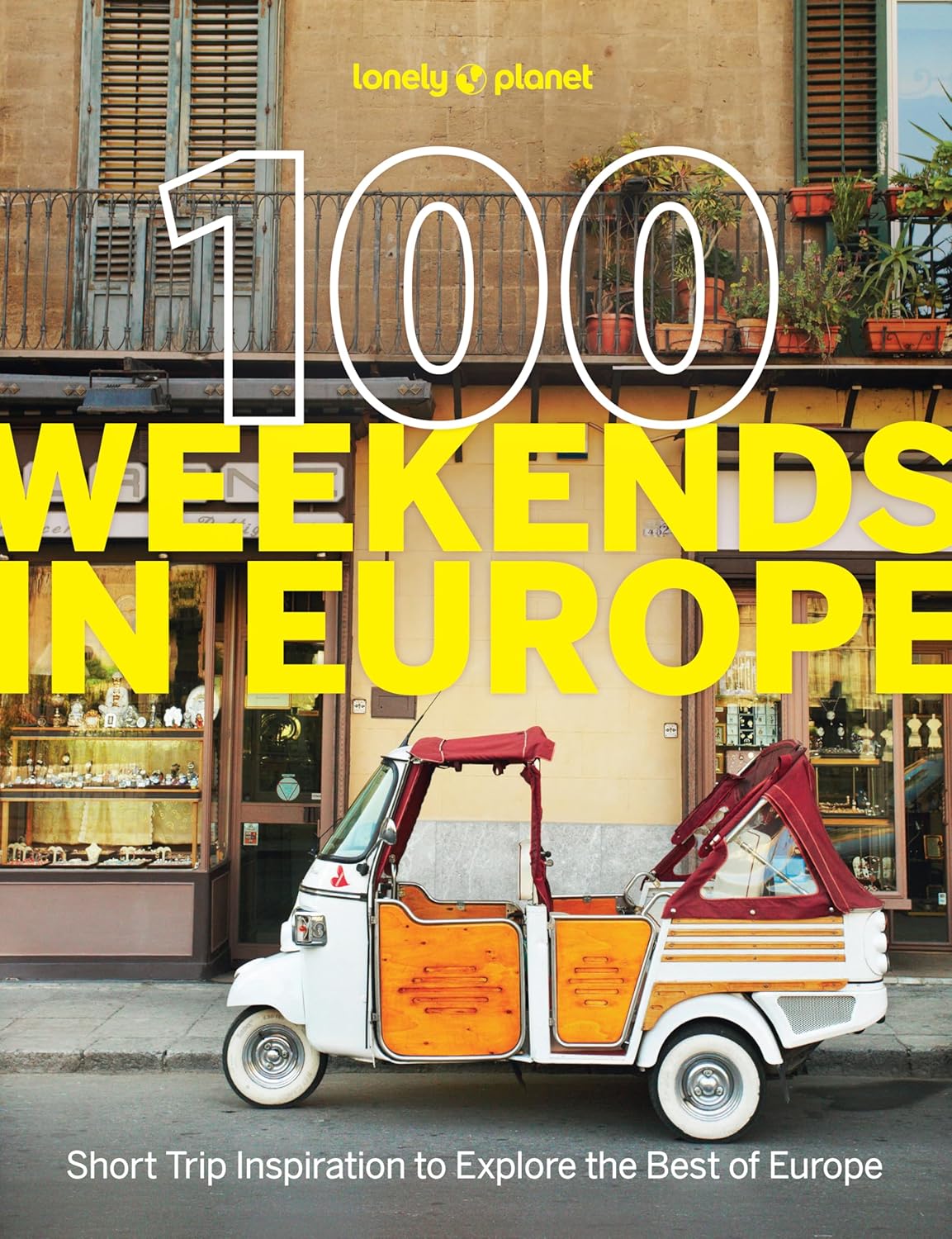
Framed Push Pin World Travel Map
Pin your past adventures and plan future ones with this classic framed world map.
View on Amazon → (opens in a new tab)
Lonely Planet 100 Weekends in Europe
A beautifully curated guide to weekend escapes across Europe — the kind of trips that belong on every second-half bucket list.
View on Amazon → (opens in a new tab)As an Amazon Associate I earn from qualifying purchases.